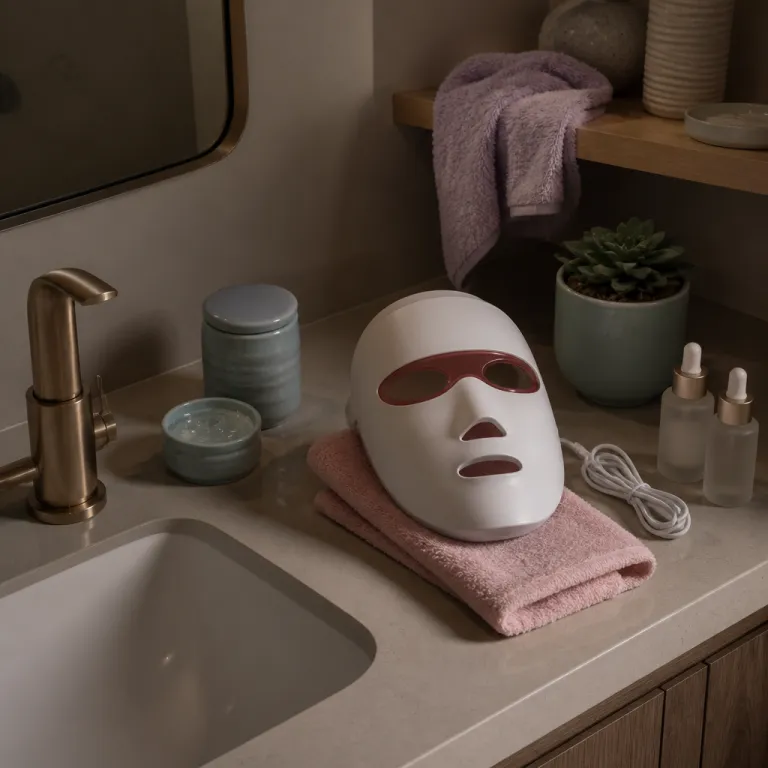
What a luxury red light mask really does to your skin
A serious at home LED mask review starts with biology. When a calibrated LED face mask bathes your skin in controlled red light, it triggers photobiomodulation inside the mitochondria and nudges cells to produce more adenosine triphosphate (ATP), the molecule that fuels intracellular processes. That increase in cellular energy availability can support better collagen signalling, calmer inflammation and a subtle but real shift in how your face handles daily stress.
Think of LED light therapy as a quiet skincare coach rather than a dramatic in office treatment. The best LED devices for home use usually combine three precise wavelengths of visible red light and near infrared light to reach different depths in the skin and support both surface radiance and deeper repair. Luxury masks often add blue light as a separate therapy mode for acne treatment, so you can toggle between calming redness and targeting breakouts without changing the device, mirroring the multi wavelength protocols used in small clinical trials on photodynamic and low level light therapy.
On a luxury level, the beauty of a therapy mask is consistency and comfort. A well designed LED mask wraps the face evenly so every area of skin receives similar light exposure and you are not chasing fine lines on your forehead while neglecting lines and wrinkles around the mouth. That even coverage matters more than you think, because light therapy is dose dependent and patchy illumination gives patchy results on real faces, a point echoed in peer reviewed studies that report outcomes based on total energy delivered per square centimetre rather than just session length.
Clinic tech in your bedroom: how at home LED masks measure up
High end LED devices are essentially the Peloton of beauty tech. A thoughtful at home red light mask review has to compare them with in clinic panels that use medical grade LEDs and longer treatment time under the supervision of a board certified dermatologist. Those professional devices often combine red light and near infrared light at high power, so they can deliver visible changes in fewer sessions but at a higher cost and with less flexibility, and they are typically supported by controlled trials that specify wavelength, irradiance and cumulative dose.
Home LED light masks dial down intensity but win on frequency and comfort. You can use a face mask while answering emails, and that regular exposure to therapeutic light can rival occasional in office therapy if you commit to three to five sessions per week. For clients who already invest in advanced salon care, multi function systems that pair deep cleansing with LED face coverage can extend the glow between appointments without replacing professional judgement, acting as maintenance between fractional laser, microneedling or chemical peel sessions.
Luxury buyers should look closely at how a device fits into an existing skincare routine and lifestyle. A well engineered LED mask should sit comfortably over the face without pressing on the nose or cheeks, offer adjustable straps or flexible panels and allow you to apply a hydrating serum that supports the skin barrier before each treatment. When the design is right, with a realistic treatment time of around three to ten minutes and intuitive controls, the mask becomes a quiet ritual rather than a chore and that is where at home light therapy starts to feel genuinely luxurious.
The price gap: what you really get from 30 versus 300
Not all LED masks are created equal, and price is not just packaging. A meaningful at home red light mask review has to explain why a budget LED mask with scattered bulbs feels different from a dense array of diodes in a premium device. The short answer is wavelengths, power, coverage and how intelligently the mask delivers light to your skin, all of which can be checked in the technical specifications or user manual rather than relying on marketing language alone.
Entry level masks often use generic red light and blue light without clearly stating the exact wavelengths or energy output. In contrast, a higher end LED face mask will specify three targeted wavelengths, for example one visible red light around 630 to 660 nanometres for collagen, one blue light near 415 to 450 nanometres for acne bacteria and one near infrared light in the 800 to 880 nanometre range for deeper support, and it will distribute them evenly across the face. Many premium devices also publish irradiance (for example 20 to 60 mW/cm² at the skin surface) and total LED count so you can estimate dose per session and compare it with ranges used in published photobiomodulation studies.
Coverage is where luxury devices quietly excel and justify their price. A well designed therapy mask hugs the contours of the face so the cheeks, jawline and forehead receive consistent light, while cheaper masks can leave dark zones where the skin barely sees any LED light at all. When you are paying for results on fine lines and early wrinkles, you want every centimetre of skin to be part of the treatment, not just the centre of your face, and a quick comparison of LED density, stated wavelengths, irradiance and treatment time across devices can make those differences much clearer.
Red versus blue versus infrared: choosing the right light for your face
Colour matters in LED therapy, and not just for the Instagram shot. A thoughtful at home red light mask review has to separate what red light does from what blue light and infrared light can offer to different skin concerns. Red light in the 630 to 660 nanometre range mainly supports collagen, reduces low grade inflammation and helps the skin look more even over time, with small clinical trials suggesting modest improvements in texture and fine lines when used consistently at controlled doses over eight to twelve weeks.
Blue light sits at a shorter wavelength and targets the porphyrins produced by acne causing bacteria, which makes it useful for mild to moderate breakouts when used consistently. Many of the best LED devices now combine red light and blue light modes so you can calm active acne while also working on post blemish marks and texture in the same LED face session. Near infrared light, which is invisible to the eye, penetrates more deeply and is often added to a therapy mask to support circulation and deeper tissue recovery, although its cosmetic benefits are more subtle and usually require patience and regular use.
For a luxury skincare minimalist, the smartest choice is usually a device that offers all three options. You can run a red light and infrared light session on evenings focused on barrier repair and then switch to a blue light focused treatment when your skin feels congested or breakout prone. That flexibility lets one LED mask adapt to hormonal cycles, seasonal changes and the natural shifts in how your face behaves across the year without needing multiple separate gadgets cluttering your bathroom.
Putting hero devices to the test: a real world luxury LED review
Names like Dr Dennis Gross have become shorthand for serious at home LED. Any honest at home red light mask review of luxury options has to look closely at the Dr Dennis Gross DRx SpectraLite FaceWare Pro, because it set the standard for a compact yet powerful LED face device. This face mask combines red light and blue light in a rigid shell that covers the full face and is designed for a short treatment time that fits easily into a nightly routine, with 162 LEDs arranged to minimise gaps in coverage according to the manufacturer.
The FaceWare Pro is an FDA cleared LED mask (510(k) K171720), which means the device has been reviewed for safety and basic efficacy claims in the context of cosmetic light therapy rather than as a medical cure. Its SpectraLite FaceWare design uses a dense grid of LEDs to minimise shadowed areas on the skin, and the three minute treatment time encourages daily use rather than occasional experiments. In practice, consistent users often report softer fine lines around the eyes, slightly firmer contours and fewer inflammatory breakouts after several weeks, especially when the mask is paired with a gentle skincare routine focused on barrier support and sun protection.
Luxury beauty lovers who already invest in longevity focused skincare, such as the science driven routines explored in this analysis of longevity science in luxury beauty on Lancôme and longevity science, tend to appreciate how LED devices slot into a long game strategy. An LED face mask will not replace injectables or in office lasers, but it can extend the time between those appointments and keep the skin in a calmer, more resilient state when used as part of a broader plan. The real test is not the selfie immediately after a session but how your bare face looks in neutral bathroom light after eight weeks of quiet, consistent use at recommended settings.
How to use a red light mask at home for real results
Technique matters as much as the device when you bring LED home. A realistic at home red light mask review has to spell out that you need three to five sessions per week for at least eight to twelve weeks before judging results on fine lines or acne, which aligns with many low level light therapy protocols in the literature. Think of it like a home fitness programme for your skin rather than a one off spa treatment, with gradual improvements rather than overnight transformation.
Start with clean, dry skin and a non occlusive hydrating serum that will not block the light, then fit the LED mask snugly over your face and follow the recommended treatment time without cutting corners. Most of the best LED devices are designed for short daily sessions, and skipping days breaks the cumulative effect that light therapy relies on to nudge collagen and calm inflammation. If you are under the care of a board certified dermatologist for active acne or melasma, always clear any new LED device with them first, especially if you are using photosensitising prescriptions or have a history of light triggered flares.
Luxury is also about knowing when to stop. If your skin feels unusually hot, tight or reactive after a session, reduce the frequency or shorten the treatment until your face adjusts to the new ritual. People with a history of light triggered conditions, very photosensitive skin or eye disease should seek medical advice before starting, and everyone should use eye protection and follow manufacturer instructions carefully. The goal is a quiet, sustainable partnership between light and skin, not a race to the strongest setting on the newest device or an attempt to exceed the doses used in controlled studies.
FAQ
How long does it take to see results from a red light mask at home ?
Most people need eight to twelve weeks of consistent use before judging results from a red light mask at home. Fine lines and early wrinkles usually soften gradually, while overall tone and post acne marks can look more even after several weeks. Small clinical studies on LED phototherapy suggest that changes continue to build for several months with regular use at appropriate wavelengths and energy levels.
Can a red light mask replace in office treatments ?
An at home LED mask can complement but not fully replace in office treatments such as lasers, microneedling or chemical peels. Professional devices use higher power and are guided by a board certified dermatologist, so they can address deeper wrinkles or significant acne scarring more efficiently. Home devices shine when used between appointments to maintain results and support everyday skin health, especially for people who value gradual, low downtime maintenance.
Is blue light safe for acne prone and sensitive skin ?
Blue light in well designed LED devices is generally considered safe for acne prone skin when used as directed. It targets acne causing bacteria rather than peeling the surface, which makes it gentler than many topical treatments, but very sensitive or rosacea prone faces should start slowly. If you notice increased redness or discomfort, reduce frequency and consult a dermatologist, particularly if you have a history of photosensitivity or are taking medications that increase light reactivity.
Can I use a red light mask with retinol or acids ?
Many people successfully combine LED light therapy with retinol or gentle acids, but you should introduce changes one at a time. Start LED on nights when you are not using strong actives, then gradually layer them on alternate evenings once you know how your skin responds. If irritation appears, prioritise barrier repair and pause either the LED or the active product until your face feels calm again, then reintroduce slowly at a lower frequency.
What features should I prioritise when buying a luxury LED mask ?
Look for clearly stated wavelengths for red light, blue light and any infrared light, an even distribution of LEDs across the face and a comfortable fit that you can tolerate several times per week. Independent safety testing or FDA cleared status adds reassurance, especially for long term use, and published irradiance values help you understand how the device compares with parameters used in peer reviewed research. Finally, choose a treatment time and design that genuinely fits your lifestyle, because the best LED device is the one you will actually use consistently.