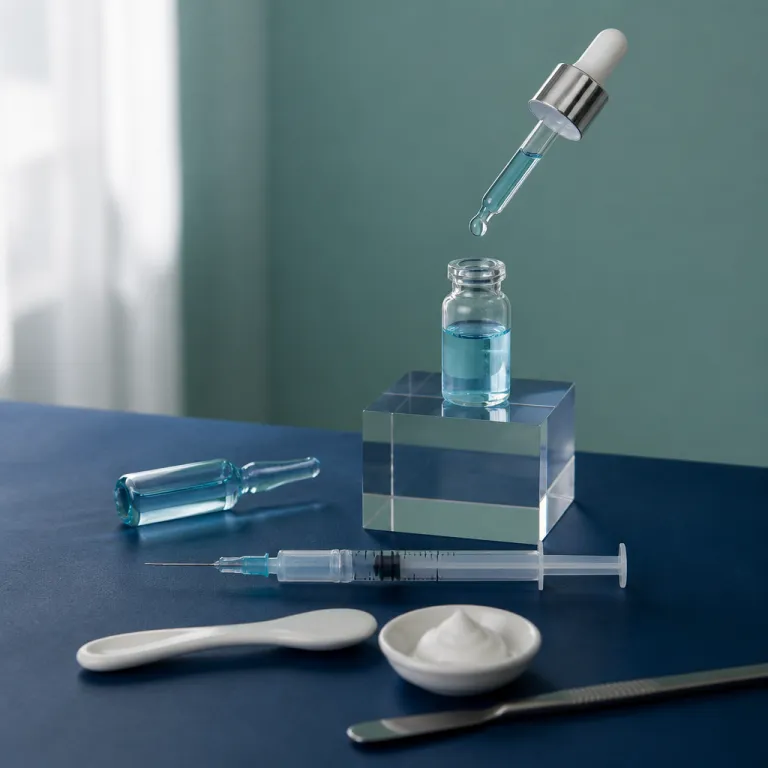
From Korean clinics to your vanity: what PDRN really is
PDRN can sound clinical, almost like a prescription drug. In reality it is a biopolymer composed of purified DNA fragments, typically extracted from salmon sperm and standardized to a defined molecular weight range (commonly in the low hundreds of kilodaltons). It was first developed in regenerative medicine for wound healing and tissue repair, with injectable formulations used in chronic ulcers and post-surgical recovery. Luxury skincare now borrows this DNA-derived technology to target skin that is tired, thinned, and showing fine lines.
In Korean dermatology clinics, PDRN first appeared as injectable treatments for skin repair rather than as a simple serum. Clinical protocols used highly purified salmon DNA fragments at concentrations around 1.875–5.625 mg/mL, designed to interact with adenosine A2A receptors in the skin and support collagen production during wound healing. Randomized trials in diabetic foot ulcers and pressure sores, such as studies published in Plastic and Reconstructive Surgery (early 2010s) and Wound Repair and Regeneration, reported faster re-epithelialization and improved tissue quality compared with placebo or standard care, providing the medical backdrop for today’s cosmetic use. When you see PDRN skincare in a bottle, you are essentially getting a topical echo of those regenerative treatments, adapted for sensitive skin and daily use rather than injected into deeper tissues.
The core properties PDRN offers are regenerative, anti-inflammatory, and pro-healing for compromised skin in medical contexts. In hospital settings, this nucleic-acid-based ingredient helped chronic wound patients by accelerating tissue repair and improving collagen structure in human skin, as documented in peer-reviewed journals on tissue engineering and dermatologic surgery throughout the 2000s and 2010s. That same molecular logic now underpins high-end PDRN formulas that aim for firmer texture, calmer redness, and a more resilient skin barrier, while staying within cosmetic claims and regulations. It is important to note that most of the robust data still come from injectable drugs, and evidence for over-the-counter serums is emerging but far less extensive.
How PDRN works on the skin: receptors, collagen and repair
On a molecular level, PDRN behaves less like a blanket hydrator and more like a targeted signal. Short DNA fragments from salmon sperm are broken down into nucleotides that can activate adenosine A2A receptors in human skin cells, nudging them toward regeneration and more efficient tissue repair. This receptor-level communication is why PDRN skincare is often positioned as an age-defying or recovery-focused option rather than a basic moisturizer.
When adenosine and its receptors are engaged correctly, they can support collagen production and reduce inflammatory cascades that slow wound healing. Experimental models show that A2A receptor agonists promote fibroblast activity, angiogenesis, and better organization of collagen fibers in damaged tissue, while dampening excessive inflammatory mediators. Clinical research on DNA-derived drugs using similar nucleotide pools, including PDRN-based injectables studied in randomized controlled trials in the early 2010s, reports improved skin repair and more orderly collagen deposition in ulcers and surgical wounds, which informs how cosmetic chemists frame the potential of topical PDRN.
Most high-end PDRN–hyaluronic serums pair the DNA polymer with hyaluronic acid to address both regeneration and hydration. Hyaluronic acid brings immediate plumpness to the skin surface, while the salmon DNA complex is intended to work deeper on tissue repair and longer-term collagen support. A small consumer-facing study reported that a PDRN-containing cream used twice daily for eight weeks improved clinical scores of texture and fine lines in healthy volunteers, though the sample size was modest and not all outcomes were placebo-controlled. If you already love a rich collagen mask or a raw honey mask ritual, you can think of PDRN as occupying a similar “treatment” slot in your routine: an indulgent yet functional step that focuses on resilience rather than only glow.
PDRN versus other K beauty icons: snail, centella and collagen
Luxury K-beauty has trained us to parse ingredients the way sommeliers parse vintages. Snail mucin serums focus on cushioning hydration and barrier support, while centella asiatica essences excel at calming inflammatory flare-ups in sensitive skin. The salmon DNA complex sits in a different lane, prioritizing regenerative skin repair and collagen remodeling over surface-level dewiness.
Think of snail filtrate as the comforting blanket and centella as the soothing tea, while PDRN behaves more like a clinical therapist for your skin. Its DNA fragments speak directly to cellular receptors, encouraging tissue repair in a way that traditional botanical extracts cannot fully match in current head-to-head data. When you layer a collagen mask over a PDRN–hyaluronic serum, you are essentially pairing structural support with regenerative signaling, combining an external film-forming boost with an ingredient inspired by wound-healing science.
For the beauty lover who tracks every new ingredient on Google, this distinction matters. Snail and centella remain excellent for daily soothing, but the properties associated with PDRN are closer to what you would expect from a school-of-medicine-backed approach to visible aging. At the same time, most cosmetic formulas have not been tested as rigorously as prescription injectables, and there are currently no large, long-term randomized trials for topical PDRN serums, so it is wise to treat them as promising, science-inspired tools rather than guaranteed substitutes for in-clinic procedures.
From clinic to counter: sourcing, ethics and label literacy
Because PDRN is extracted from salmon sperm, sourcing questions are inevitable for luxury consumers. The DNA-based material is not vegan, and anyone avoiding animal products will need to skip both singular and plural forms of salmon-derived actives. Eco-conscious buyers should look for brands that disclose their salmon origin, purification steps, and any third-party audits of aquaculture or by-product sourcing, and should be aware that independent verification is still limited in this niche.
On the label, concentration and molecular weight are the quiet details that separate a serious PDRN skincare formula from a marketing gesture. Clinical-style injectables typically use standardized ranges such as 1.875–5.625 mg/mL with defined fragment sizes, while vague references to “salmon DNA” without percentages tell you very little about actual skin-repair potential. When you search online, focus on brands that share data about collagen production markers, wound-healing support in controlled studies, or reductions in inflammatory mediators in human skin models rather than only dramatic before-and-after photos, and remember that most of these data are extrapolated from medical literature rather than full cosmetic drug trials.
Luxury shoppers in New York City or Los Angeles often consult a board-certified dermatologist before adding a drug-adjacent ingredient to their routine. These experts, many trained at a major school of medicine, can explain how adenosine receptors respond to PDRN and whether your sensitive skin, inflammatory conditions, or history of procedures make you a good candidate. That level of guidance turns a trending ingredient into a tailored age-defying strategy rather than another serum gathering dust on the shelf, and helps you weigh realistic benefits against cost, ethical preferences, and the current limits of topical evidence.
How to use PDRN in a luxury age defying routine
To integrate PDRN into a high-end regimen, placement matters. Use a PDRN–hyaluronic serum on clean, slightly damp skin so the DNA fragments and hydrating base can penetrate before heavier creams. Follow with a barrier-focused moisturizer and broad-spectrum SPF to lock in regenerative activity and protect collagen from daily environmental micro-damage that behaves like repeated, low-grade wounding.
Texture-wise, the best formulas feel like weightless ampoules rather than sticky gels. They absorb quickly, leaving skin with a satin finish that layers well under makeup or over actives such as retinol, provided your dermatologist approves the pairing. If your skin is very reactive or prone to inflammatory flares, start with alternate-day use, avoid combining with multiple new actives at once, and monitor for any unusual redness or stinging that could signal irritation.
Luxury is not only about price; it is about precision and restraint. One well-formulated serum built around PDRN’s properties can often replace several overlapping products that promise vague “healing” benefits. The mirror test remains simple here: not the Instagram filter, but the unedited reflection that shows whether your skin looks calmer, denser, and more quietly confident after eight to twelve weeks of consistent, sunscreen-supported use.
FAQ
Is PDRN safe for sensitive skin types?
PDRN has a strong clinical history in wound healing, which suggests good compatibility with compromised and sensitive skin when used in medical settings. That said, topical serums also contain preservatives, solvents, and fragrances, so patch testing is essential before full-face use. If you have a history of fish or seafood allergies, or severe inflammatory conditions such as active eczema or rosacea, speak with a board-certified dermatologist before trying any salmon DNA product.
How is PDRN different from regular collagen or hyaluronic acid?
Collagen and hyaluronic acid mainly act as structural and hydrating agents on the skin surface, while PDRN works at a molecular level by signaling through adenosine receptors and providing nucleotide building blocks. This DNA-derived ingredient aims to support tissue repair and collagen production from within the skin rather than simply sitting on top. Many luxury serums now combine PDRN–hyaluronic complexes so you get both immediate plumpness and longer-term regenerative support, though individual results and evidence levels vary by brand and formulation.
Can PDRN replace retinol in an age defying routine?
PDRN and retinol address aging through different biological pathways, so one does not strictly replace the other. Retinoids increase cell turnover and collagen synthesis but can be irritating, while salmon DNA complexes focus on regenerative healing, angiogenesis, and reducing inflammatory stress. Some patients use both under dermatologist supervision, especially when their skin needs repair support after aggressive retinoid use or procedural treatments, but sensitive users may prefer to alternate or cycle them.
Is PDRN considered a drug or a cosmetic ingredient?
In medical settings, PDRN can be part of drug-classified injectables used for wound healing and tissue repair, with specific concentrations and clinical endpoints. In over-the-counter skincare, the same type of DNA material is regulated as a cosmetic ingredient, which means brands cannot claim to treat diseases or deep wounds and must focus on appearance-related benefits. Always differentiate between clinical mesotherapy-style treatments performed by physicians and topical PDRN skincare you apply at home, and read claims with that regulatory context in mind.
What should I look for when buying a PDRN serum?
Look for clear labeling of PDRN concentration, ideally in parts per million or mg/mL, and any mention of controlled molecular-weight ranges or standardized sources. Check whether the formula pairs the salmon DNA complex with supportive components such as hyaluronic acid, ceramides, and soothing botanicals for comprehensive skin repair. Finally, prioritize brands that share clinical-style data or at least ingredient-level references, consult with a dermatologist if you have concerns, and let your own mirror results and tolerance guide long-term loyalty.