
Summary
Editor's rating
Is it worth the money?
Packaging and bottle: small, simple, and kind of deceptive at first glance
Application and feel in the hair
Smell: discreet and not annoying
How it holds up in real life (heat, humidity, routine)
What is K18 and how you’re supposed to use it
Does it actually repair damaged hair?
Pros
- Real improvement on damaged, porous hair: less breakage, softer feel, better elasticity
- Lightweight leave-in texture that doesn’t weigh hair down or make it greasy
- Effects last between washes after a few uses, not just a one-day cosmetic fix
Cons
- Very expensive for a small 50 ml bottle, especially on long or thick hair
- Routine is a bit restrictive at first (no conditioner, 4-minute wait before other products)
- Results on mildly dry or already healthy hair don’t justify the high price

Specifications
View full product page →| Brand | K18 |
A tiny bottle that promises a lot
I’ve been abusing my hair for years: bleach, color, straightener, curling iron, blow dryer on max heat… the full package. My hair type is somewhere between wavy and frizzy, quite porous, and it tends to snap and look dull if I’m not careful. So when I picked up the K18 Leave-In Molecular Hair Mask, I was clearly the target: damaged hair, split ends, and that dry “hay” feeling on the lengths.
I’d already tried the usual stuff: Olaplex, protein masks, heavy conditioners, oils, drugstore masks, salon masks. Some of them helped for a day or two, but my hair always went back to the same straw texture as soon as I washed it. K18 caught my eye mainly because everyone repeats the same thing: “it actually repairs from the inside” and “don’t use conditioner before it.” Honestly, the price for 50 ml hurt a bit, so I went in with high expectations and a bit of suspicion.
I used it for several weeks, following the instructions pretty strictly: clarifying shampoo the first time, no conditioner, towel-dried hair, a few pumps of product, wait 4 minutes, and then style as usual. I tested it both on days when I let my hair air dry and on days when I used heat tools. I also spaced the uses like they recommend: more frequent at the start, then every few washes.
In this review, I’ll stick to the basics: what the product actually does on damaged hair, how it feels to use, how long the 50 ml bottle really lasts, and if I think it justifies the high price. No marketing talk, just what I saw in the mirror and felt in my hair over time. Spoiler: it’s not perfect, but it’s clearly not snake oil either.
Is it worth the money?
Let’s talk about the painful part: the price. The 50 ml bottle is clearly expensive for the amount of product you get. When you first see it, it feels like you’re paying a premium for a travel size. But if you break it down by use, it’s a bit less shocking. With the pump system, you roughly get around 50 small pumps in the bottle. On my mid-back length hair, I used 3–4 pumps per treatment, so around 12–16 uses per bottle. If your hair is shorter or thinner, you’ll get more; if it’s very long and thick, you’ll get fewer.
They recommend using it for the first 4–6 washes in a row, then only every 3–4 washes. That means the bottle can last a few months if you don’t wash your hair every day. Personally, washing 2–3 times a week, I used it often at the start, then dropped down to once every 2 weeks or so. It still felt like an expensive habit, but not as crazy as using a heavy, pricey mask every single wash. When I compared it to all the random masks, oils, and treatments I’ve bought that did almost nothing, I’d rather have one product that actually helps, even if the upfront price is higher.
That said, it’s not good value if your hair is only mildly dry or not really damaged. In that case, cheaper products will be enough and you’ll just be wasting money for a small improvement. It’s also not ideal if you have very long, very thick hair and you need 5+ pumps each time. You’ll burn through the bottle pretty fast and the cost per month will be painful. For that kind of hair, the bigger size might make more sense, but the total bill climbs fast.
So, for value, I’d say: it makes sense if your hair is truly in bad shape from bleach, color, or aggressive heat and you’ve already tried cheaper options with mediocre results. If your hair is already in decent shape or you’re on a tight budget, there are more reasonable options that will get the job done, even if they don’t repair as deeply. It’s one of those products where the cost can be justified, but only for a specific type of user and hair situation.
Packaging and bottle: small, simple, and kind of deceptive at first glance
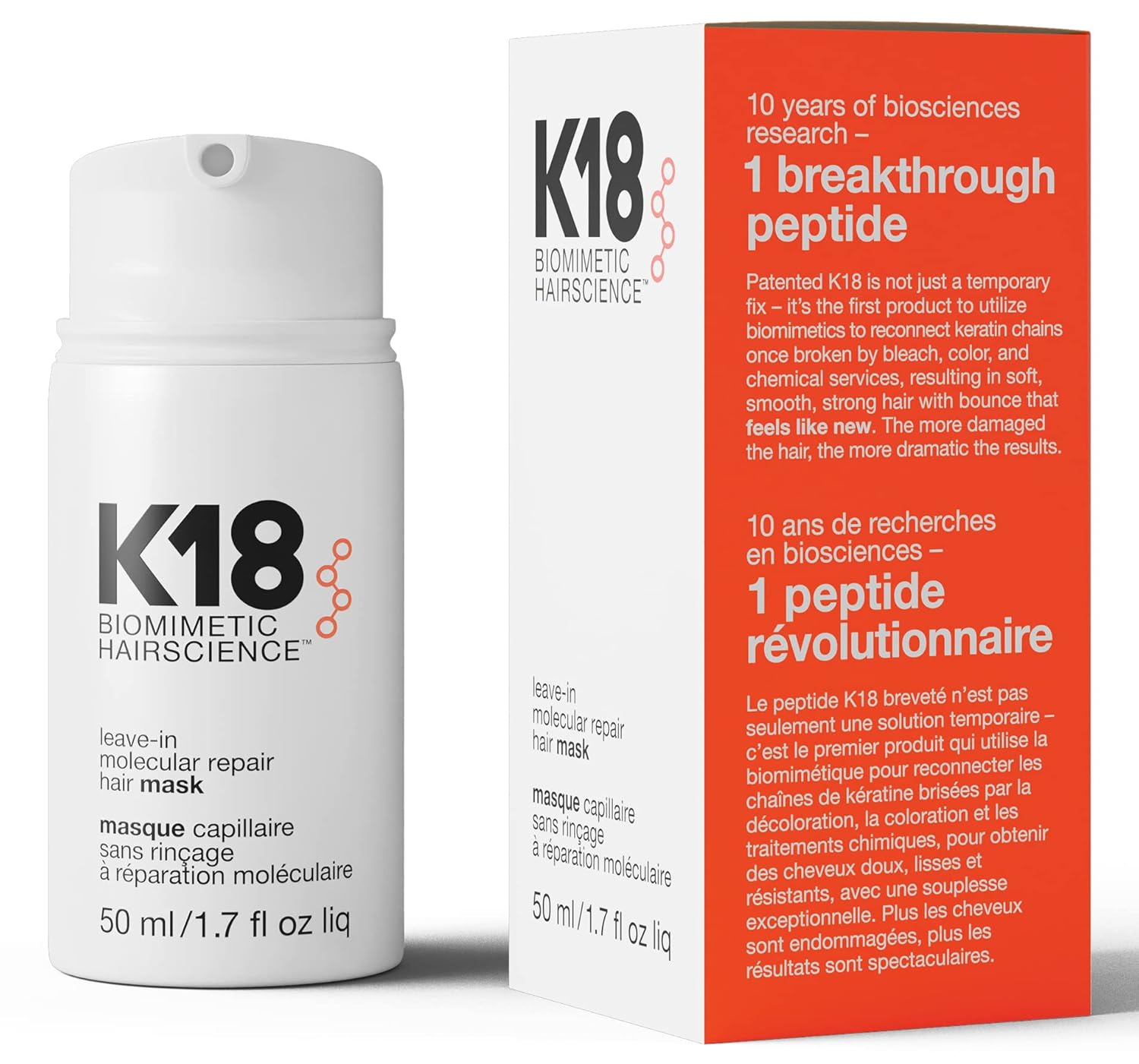
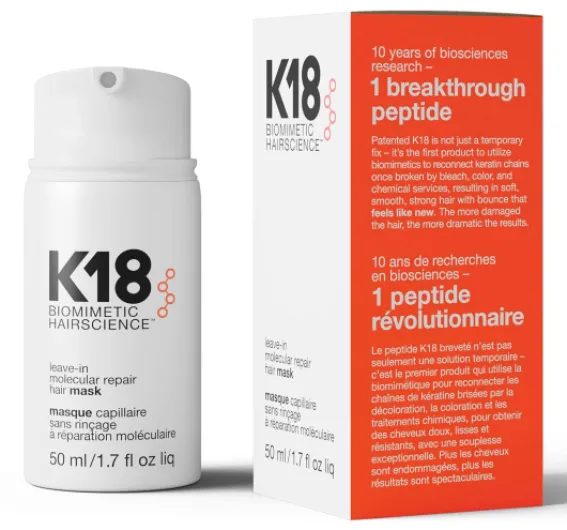
The 50 ml version is honestly tiny for the price. When you get it in your hand, you almost feel a bit ripped off at first. It’s a small white plastic bottle with a pump, pretty minimalist design, no fancy stuff. On the plus side, the pump is precise: it dispenses small, controlled doses, which matters a lot with a product that you’re supposed to use sparingly. You’re not going to accidentally dump half the bottle into your hand in one go.
The bottle is compact and travel-friendly. It doesn’t leak, and the cap stays on well in a toiletry bag. That’s a small detail, but since it’s expensive, I appreciated not being stressed about it spilling everywhere. It’s lightweight and fits easily in a small pouch, so if you’re someone who travels a lot, this is not a bulky product to carry around. It looks more like a skincare product than a hair mask, which matches the “treatment” image they’re going for.
In terms of practicality, the pump also helps you track how much you’re using. After a few uses, I got a feel for how many pumps my hair really needed (for me, 3–4 was enough for mid-back length, damaged hair). That matches what some Amazon reviewers said: the 50 ml size is roughly 50 pumps, so around 20–25 uses depending on your hair. Once you do the math, the cost per use is still high, but not as shocking as it looks when you first see the bottle.
On the downside, there’s no clear window to see how much product is left. You have to guess from the weight and how many times you’ve pumped. It’s not a big deal, but when you’re paying this much, a little transparent strip wouldn’t hurt. Overall, the design is simple, functional, and discreet. It doesn’t scream luxury, but it does feel practical and thought-through for daily or weekly use.
Application and feel in the hair
Using K18 is pretty straightforward: after washing and gently towel-drying, I put 3 small pumps in my hands, rubbed them lightly together, and applied mainly to the mid-lengths and ends, then whatever was left closer to the roots. The cream texture is light and spreads well, so it doesn’t clump or leave white residue. It doesn’t feel like a heavy mask at all, more like a light leave-in cream. You can easily work it through with your fingers without tugging too much on already fragile hair.
The first odd moment is when you skip conditioner in the shower. If your hair is really damaged, it feels rough while you’re rinsing the shampoo out, and you think there’s no way a few pumps of cream will fix the tangles. But once K18 is on and you wait the 4 minutes, it actually gets easier to comb. I could pass a wide-tooth comb through my hair without breaking half of it, which is not usually the case if I skip conditioner. It doesn’t feel super slippery like silicone-based products, but it’s enough to detangle without pain.
Once the hair is dry, the feeling is quite comfortable. The product is lightweight: it doesn’t weigh the hair down, doesn’t leave a sticky film, and doesn’t make the roots greasy. On my hair, it left a slightly smoother texture, less rough to the touch, especially on the ends. It doesn’t give that ultra-coated, “plastic” smoothness you get from some heavy conditioners or silicone serums. It’s more of a natural softness, which I actually prefer. If you like that ultra-slippery feeling, you might find it a bit too discreet.
On the scalp side, I didn’t notice irritation, itching, or extra oiliness, even when a bit of product touched the roots. I have a fairly sensitive scalp, and some leave-ins make me scratch by the end of the day. That didn’t happen here. In daily life, the hair feels light and flexible, not stiff or crunchy. For comfort of use and feel in the hair, it’s a pretty solid product, especially for something you don’t rinse out.
Smell: discreet and not annoying
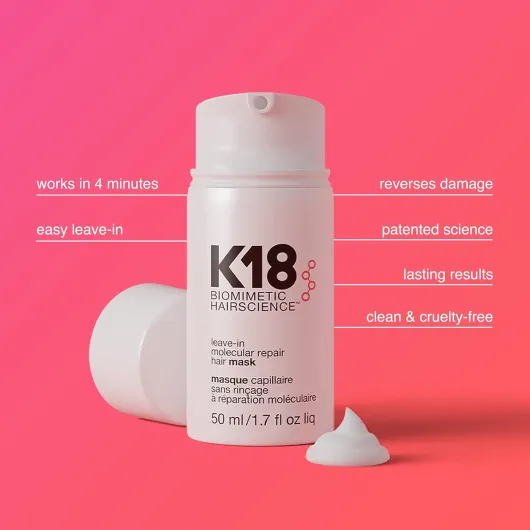
Fragrance is pretty restrained on this one. Some people say it’s fragrance-free, others say it has a light smell. On my bottle, there is a scent, but it’s very light and doesn’t stick around. When you pump it into your hand, you get a faint “clean product” smell, nothing floral, nothing super sweet, just a neutral cosmetic scent. Once it’s in the hair and dried, I honestly don’t smell it anymore unless I put my nose right in the strands.
If you’re sensitive to strong perfumes in hair products, this is a good point. I usually avoid products that leave a strong smell for hours, especially when it mixes with other stuff like shampoo, dry shampoo, or perfume. With K18, it doesn’t clash with anything. You can still use your usual shampoo and whatever light styling product without ending up with a weird mix of scents on your head.
Compared to some popular salon treatments that smell very strong or chemical, K18 is pretty neutral. No sharp alcohol smell, no overpowering floral or coconut scent. That fits with the idea of a “treatment” more than a “beauty product”. If you like products that leave a very noticeable fragrance in your hair, you might find this a bit boring. But personally, for something I’m applying quite close to the scalp and leaving in, I prefer it this way.
Bottom line: the scent doesn’t bother, doesn’t linger, and doesn’t become gross in hot weather. In summer and in humidity, my hair didn’t start smelling “product-y” by the end of the day, which sometimes happens with heavier, perfumed creams. So for me, on the fragrance side, it gets the job done quietly, and that’s perfectly fine.
How it holds up in real life (heat, humidity, routine)
I tested K18 in a pretty realistic way: not just one nice wash and then babying my hair, but my usual routine with blow-drying, occasional straightening, and going out in humid weather. On days when I blow-dried my hair after using K18, I noticed it dried faster and felt smoother without needing as much extra product. The ends still needed a drop of oil for a polished look, but overall the hair didn’t puff up as much as it usually does once it cooled down.
With a straightener, the difference was more obvious. Normally, my hair tends to feel dry and stiff after straightening, especially the last 5–10 cm. With K18 used beforehand, the hair stayed more flexible and less “crispy” after styling. I could also go a bit longer between washes because the lengths didn’t get that dead, lifeless feeling as quickly. It’s not a heat protectant on its own, so I still used a separate heat protection spray, but the combo worked well. The hair felt less vulnerable overall.
In humidity, it’s not a miracle, but it helps. I live in a place where summer is hot and a bit humid, and usually my hair turns to frizz by the end of the day. With K18 used regularly (every 3–4 washes), the frizz was less intense and the curls/waves held a better shape. Still some halo and puffiness, but not the full lion’s mane. It doesn’t replace a dedicated anti-frizz product, but it gives the hair a better base so you’re not fighting as much.
Over time, what I liked most is that the results don’t totally vanish if you skip it for a week or two. After the initial 4–5 uses, I could space it out and my hair didn’t crash back to its worst state. That’s what makes it feel like an actual treatment rather than a simple cosmetic quick fix. It’s not perfect, it won’t fix hair that’s completely fried beyond repair, but for medium to heavy damage, the performance over several weeks is pretty solid.
What is K18 and how you’re supposed to use it
K18 sells this as a “leave-in molecular repair mask”, but in practice it behaves more like a treatment serum than a classic mask. There’s no rinsing, no 20-minute wait in the shower, nothing like that. The big idea is their patented K18PEPTIDE™ that’s supposed to repair hair at a molecular level by reconnecting broken bonds. I can’t verify the science myself, but I can tell you what I noticed after several uses on bleached, colored hair that’s been through a lot.
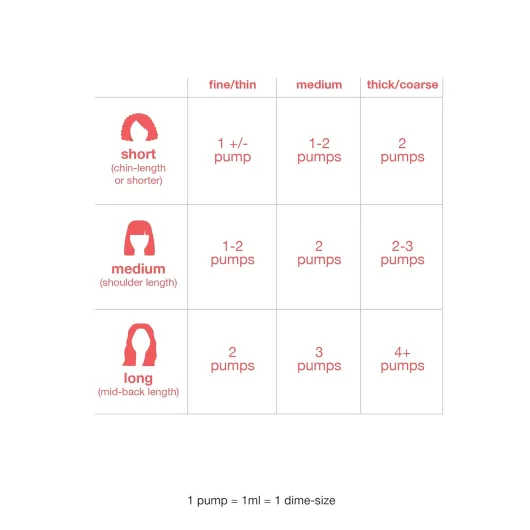
The instructions are quite strict: wash your hair (ideally with a clarifying shampoo the first time), skip conditioner completely, towel dry until it’s just damp, then apply a small amount of K18. You’re supposed to use 1–3 pumps for short hair, 3–5 for longer or thicker hair. Then you wait 4 minutes before touching anything else: no oil, no styling cream, nothing. After those 4 minutes, you can style like normal, with or without heat tools. They also say to use it for the first 4–6 washes in a row, then only every 3–4 washes to maintain the results.
In practice, that means you need to accept a pretty weird routine at the start: washing without conditioner when your hair already feels fried is not fun. The first time I did it, I was convinced I’d end up with a tangled mess. But I stuck to it to see if the product was worth all the hype. I used about 3 pumps for mid-back length, medium-thick hair. The texture is like a light cream that spreads easily, so you don’t need a huge amount to cover the lengths and ends.
One thing to note: this is clearly a treatment, not a styling product. Don’t expect it to define curls, give volume, or replace all your other stuff. Its job is to help hair feel healthier and stronger over time. I still used a bit of oil or cream after the 4-minute wait on the days I wanted more control or shine. If you go in expecting a miracle styling product, you’ll be disappointed. If you treat it like a repair step in your routine, it makes more sense.
Does it actually repair damaged hair?
This is where it gets interesting. On my bleached, heat-damaged hair, I saw a clear difference from the very first use, but not in a magical, overnight way. After my first wash with clarifying shampoo + K18 (no conditioner), my hair dried softer than usual and with less frizz. The ends still looked a bit rough visually, but the touch was different: less crispy, less likely to snap when I pulled a strand. I also noticed that my straightener glided more easily and I didn’t get that burned, straw-like feeling afterward.
After about 4 uses in a row (every wash), the change was more obvious. My hair was easier to detangle after washing, even on days when I didn’t use K18. That’s where I started to believe the “repair” claim a bit more. The lengths felt denser and less fragile, as if the hair fiber had a bit more structure. I also saw fewer broken hairs in the sink and on my brush, especially at the ends. It didn’t fix old split ends (nothing really does except scissors), but it helped them look less ragged.
In terms of shine and frizz control, I’d say the effect is solid but not mind-blowing. My hair looked a bit shinier and more disciplined, especially in humidity, but it’s not a miracle smoothing cream. It doesn’t replace a proper styling product if your main problem is frizz. Where it really shines is on resilience: hair feels like it can handle washing, brushing, and occasional heat styling without getting worse every time. That’s a big difference compared to most masks that just coat the hair for 24–48 hours.
Is it worth the price for the results? If your hair is only slightly dry or just a bit dull, honestly, no. A good mid-range mask or oil will probably be enough. But if your hair is genuinely fried from bleach, repeated coloring, or heavy heat use, K18 does more than just temporarily soften it. Over several weeks, it helped my hair behave more like “normal” hair again: less breakage, better elasticity, and less panic every time I brushed it. It’s not magic, but it’s one of the few products where I felt a real difference in the hair’s condition and not just the surface feel.
Pros
- Real improvement on damaged, porous hair: less breakage, softer feel, better elasticity
- Lightweight leave-in texture that doesn’t weigh hair down or make it greasy
- Effects last between washes after a few uses, not just a one-day cosmetic fix
Cons
- Very expensive for a small 50 ml bottle, especially on long or thick hair
- Routine is a bit restrictive at first (no conditioner, 4-minute wait before other products)
- Results on mildly dry or already healthy hair don’t justify the high price
Conclusion
Editor's rating
After several weeks of use, my opinion on the K18 Leave-In Molecular Hair Mask is pretty clear: it’s not just hype, but it’s also not a miracle cure for everyone. On genuinely damaged hair (bleached, over-colored, or cooked with heat tools), it brings a real improvement in how the hair behaves: less breakage, better elasticity, easier detangling, and a more “solid” feel to the lengths. It doesn’t just coat the hair for one day; the effect holds up between washes, especially after the first 4–5 uses.
On the flip side, the bottle is small and the price is high, so you really need to be in that category of people whose hair is basically at the edge: breaking, frizzy, porous, and not responding well to normal masks. If your hair is only a bit dry or if you already have naturally smooth, non-porous hair, you’ll probably find the improvement too minor for the cost. It’s also not a styling product: it won’t replace your anti-frizz cream, curl cream, or oil.
So, who is it for? People with bleached, heavily colored, or very damaged hair who are tired of buying random masks that only work for a day. People who don’t mind following the instructions (no conditioner, 4-minute wait) and who can handle the price. Who should skip it? Anyone with basically healthy hair, those on a tight budget, or those expecting instant, dramatic cosmetic results after one use. For me, it’s a strong treatment that I’d keep in my routine as a kind of “hair rehab” product, not something I’d slather on casually every wash.