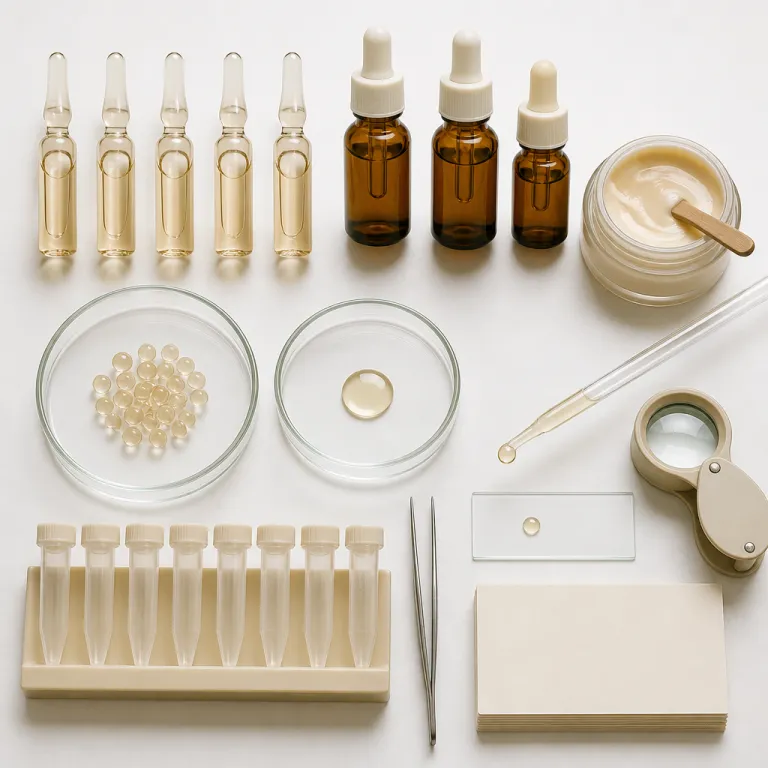
Exosome skincare science ingredients and the promise of regenerative luxury
Exosomes are tiny extracellular vesicles, around 30 to 150 nanometres, that shuttle molecular messages between cells in the skin. These biological parcels carry proteins, lipids, nucleic acids, and growth factors that can influence skin renewal, collagen production, and inflammation in ways classic skincare actives rarely match. When brands talk about exosome skincare science ingredients, they are really talking about harnessing this cell to cell whisper network for visible anti aging benefits.
In clinical and experimental settings, exosomes are usually human derived, often from mesenchymal stem cells or platelet derived preparations used to support wound healing and tissue repair. For example, Kim et al. (2017, J Invest Dermatol, doi:10.1016/j.jid.2016.09.018) reported that human adipose derived stem cell exosomes accelerated skin barrier recovery and increased collagen in damaged skin models. These human exosomes interact directly with skin cells, delivering growth factors that can upregulate collagen elastin synthesis and improve hydration, which is why early studies linked under a medical DOI often sound so impressive. Luxury skin care brands borrow this language, but the leap from a controlled exosome serum in a clinic to exosome serums on a vanity tray is larger than most marketing copy admits.
Most cosmetic products rely on plant derived or cell culture derived exosomes, often from apples, rice, aloe, or yeast, which are biologically different from human stem cell exosomes. These plant derived vesicles can still support the skin barrier and hydration, but their interaction with human skin cells is not identical to mesenchymal stem cell exosomes used in research. On an INCI list, you might see terms such as “Plant-derived Exosomes,” “Vesicle Extract,” or “Lactobacillus Ferment Lysate” alongside humectants and emollients. When you apply an exosome serum at home, you are not recreating a medical procedure; you are using a sophisticated, still evolving category of exosomes skincare that sits somewhere between classic actives and true regenerative therapy.
From clinic to countertop: what your exosome serum is really doing
In dermatology clinics, exosome formulations are often paired with microneedling or lasers, which create micro channels in the skin so exosomes can reach deeper cells. Concentrations in these medical exosome skincare preparations are typically far higher than what any over the counter serum can legally or economically deliver. For instance, in a split face trial on post laser recovery (Park et al., 2021, Stem Cells Transl Med, doi:10.1002/sctm.20-0435), human stem cell exosomes were applied immediately after fractional laser at doses not feasible in consumer products. That gap in dose and delivery method is why the glow after an in office exosome treatment feels different from the slow burn results of daily exosome serums at home.
Consumer exosome skincare science ingredients usually combine plant derived exosomes with supportive actives such as hyaluronic acid, peptides, and ceramides to boost hydration and barrier repair. A typical luxury formula might list “Hydrolyzed Rice Exosomes,” “Phospholipids,” and “Sodium Hyaluronate” in the first half of the INCI, followed by niacinamide, cholesterol, and soothing botanicals. The best luxury products position exosomes skin technology as one piece of a broader anti aging strategy, not a miracle that replaces retinoids, sunscreen, or well formulated moisturisers. When you apply an exosome serum correctly on slightly damp skin, then seal it with a cream, you are optimising both the vesicles and the classic humectants for a more elastic, light reflective surface.
Regenerative beauty also lives beyond serums, in the tools and textures that help products penetrate evenly across the skin. A high quality blending sponge can press exosome serums and hydrating bases into the skin without tugging delicate areas, helping the formula sit more evenly. If you already invest in platelet derived or stem cell inspired skincare, pairing those formulas with precise application tools is a quiet luxury that shows up in how seamlessly your complexion products sit over your treatment layers after eight hours.
At home, exosome serums work best in a streamlined routine that respects the skin barrier rather than in a maximalist cocktail of competing actives. Think gentle cleanse, hydrating mist, exosome serum, then moisturiser and sunscreen, with retinoids on alternate nights to avoid overwhelming the skin cells with too many signals at once. For readers who love professional level detail work, pairing this kind of regenerative routine with a precise lash and brow protocol creates a polished, minimal makeup aesthetic that lets the skin’s own glow lead.
Ingredient labels, DOI dreams, and the reality of clinically proven claims
Luxury skincare marketing loves a DOI reference, but most exosome skincare science ingredients on shelves are inspired by, not identical to, the formulas in those journal articles. When a study reports that mesenchymal stem cell derived exosomes improved skin renewal or reduced visible aging markers, it usually involves controlled dosing, medical grade delivery, and strict patient selection. For example, Zhang et al. (2016, Stem Cell Research & Therapy, doi:10.1186/s13287-016-0395-7) used carefully quantified human exosomes on wounded skin, not a fragranced cosmetic serum. Your serum, even at three figures, is translating that science into a cosmetic product that must sit comfortably under makeup, pass stability testing, and comply with cosmetic regulations.
On the label, you might see terms such as exosome, exosomes, exosomes skin, exosomes skincare, or more specific phrases such as plant derived exosomes or cell derived vesicles. Brands sometimes reference stem cells, stem cell extracts, or platelet derived growth factors in the same breath, even when the formula contains only conditioned media or plant stem cell derivatives. A real world INCI might read “Human Adipose Derived Stem Cell Conditioned Media, Phosphatidylcholine, Sodium Hyaluronate, Glycerin, Butylene Glycol,” followed by fragrance and preservatives. This is where a careful reading of the INCI list, and an understanding of evolving allergen and transparency rules, becomes a quiet act of self defence for your skin and your budget.
Clinically proven is another phrase that deserves scrutiny when you evaluate exosome serum claims in the context of anti aging and glow. A brand funded in house study on 30 participants over four weeks is not the same as a peer reviewed trial with a DOI and histological analysis of collagen elastin changes in skin cells. For instance, many cosmetic dossiers rely on instrumental measurements of hydration and wrinkle depth without biopsies or long term follow up. When you see exosome serums promising dramatic skin renewal, ask whether the data reflects the exact exosome skincare formula in your hand or a more potent, human derived preparation used in a medical setting.
For the skincare first minimalist, the most reliable path is to treat exosome skincare as a supporting actor alongside proven pillars such as sunscreen, retinoids, and well dosed niacinamide. Use exosome serums to refine texture, support hydration, and nudge collagen, not as a single step solution to every sign of aging. The mirror test after three months, not the marketing copy after three days, is where exosome skincare science ingredients either earn their place or quietly rotate out of your routine.
How to shop exosome skincare like a sceptical luxury insider
Start by deciding whether you want plant derived exosomes for gentle barrier support or formulas that reference human stem cells and platelet derived factors for more ambitious anti aging goals. Plant derived options tend to focus on hydration, antioxidant support, and subtle improvements in glow, while products inspired by mesenchymal stem cell science lean into firmer texture and fine line softening. Neither path is wrong; the right choice depends on how sensitive your skin is and how aggressively you already treat it with retinoids or acids.
Next, look at the full formula, not just the exosome headline, because exosome skincare science ingredients rarely work alone in cosmetic products. A well built exosome serum will pair vesicles with hyaluronic acid for hydration, barrier lipids for resilience, and soothing agents to balance any active growth factors. If the INCI list leans heavily on fragrance and light silicones with exosomes buried near the end, you are mostly paying for texture and marketing rather than meaningful cell to cell signalling.
Application technique matters too, especially when you are layering multiple serums in a luxury routine that already includes vitamin C, peptides, and retinoids. Apply exosome serums on clean, slightly damp skin, give them a full minute to interact with skin cells, then follow with a moisturiser that locks in hydration without suffocating the surface. Over time, you are looking for quieter signs of success such as fewer post inflammatory marks, steadier collagen elastin bounce, and a more consistent glow rather than a single dramatic before and after.
Finally, remember that regenerative beauty is a long game, even when the packaging feels futuristic and the language leans heavily on stem cells and growth factors. Exosome skincare sits at the frontier where real science meets consumer desire, and the science is not fully translated into everyday skin care yet. The smartest luxury is choosing exosome skincare science ingredients that respect the biology of your skin as much as the aesthetics of your shelf, because the real status symbol is how your bare face looks in unforgiving daylight, not under a filter.
Key figures in exosome skincare and regenerative beauty
- In a frequently cited clinical style study on human mesenchymal stem cell derived exosomes for wound healing, Zhang et al. (2016, Stem Cell Research & Therapy, doi:10.1186/s13287-016-0395-7) reported significantly faster re epithelialisation and improved collagen organisation compared with controls, but these medical doses are far higher than those used in cosmetic serums.
- Market analyses of regenerative skincare, such as Grand View Research’s 2023 report on stem cell and exosome based cosmetics, estimate that this niche represents a small but rapidly expanding slice of the luxury skin care market, with projected compound annual growth rates above 10% versus mid single digit growth for conventional moisturisers, highlighting strong consumer interest despite limited long term data.
- Formulation audits of prestige exosome serums show that exosome related ingredients often appear below the halfway point of the INCI list, suggesting relatively low concentrations compared with humectants such as glycerin and sodium hyaluronate, which reinforces the need to view these products as supportive rather than standalone anti aging treatments.
- Dermatology experts consistently emphasise that sunscreen and retinoids still account for the majority of clinically proven improvement in photoaging, while exosome skincare science ingredients are considered promising adjuncts rather than replacements, underscoring the importance of integrating exosome serums into, not instead of, established routines.