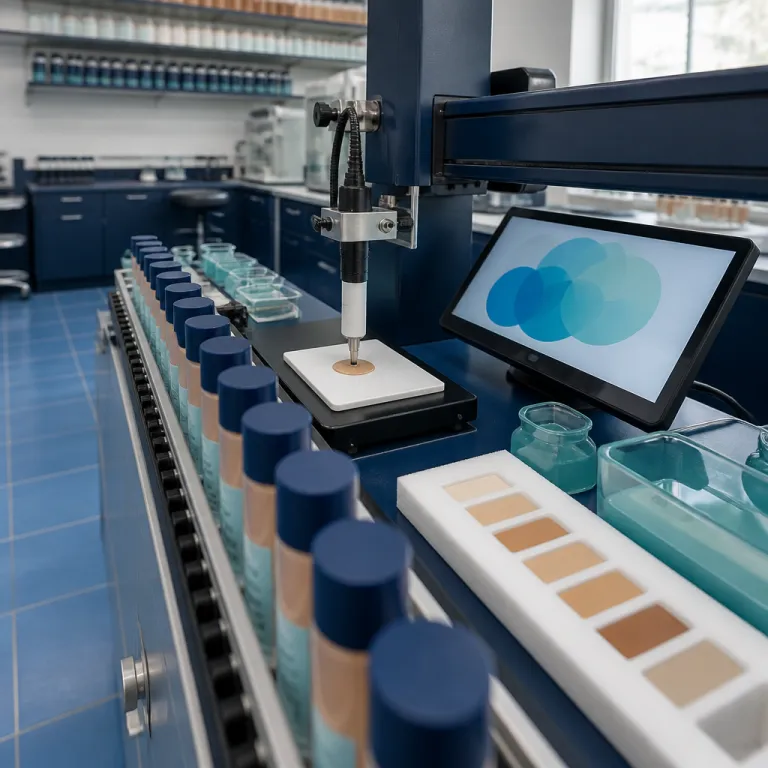
Why luxury beauty is betting on AI shade matching
The AI shade matching foundation tool is no longer a novelty on luxury retailer apps, it is the quiet engine deciding which foundation sits on your face. These systems scan your skin tone through your phone camera, translate millions of pixels into data, then suggest a foundation shade shortlist that promises a near perfect shade match without you stepping under a department store spotlight. For a luxury consumer used to custom fittings and made to measure tailoring, this new kind of digital shade finder feels like the logical next concierge service for the skin.
At its core, an AI shade matching foundation tool is a computer vision and machine learning engine trained on thousands of real faces wearing known foundation matches in different lighting conditions. The camera captures a calibrated photo or live video, the algorithm analyses colour values and undertone shifts across the skin, and then a foundation finder model ranks which shades will work best for that specific skin tone. Think of it as a hyper patient foundation finder that never forgets a swatch and can compare your pixels to an archive far larger than any counter artist’s memory.
Luxury brands lean into this because complexion ranges now span 40 to 60 shades, and even experts can pull hair trying to find foundation options that feel exact rather than approximate. An AI powered shade finder or finder tool can narrow that wall of bottles to three or four foundation shade candidates that actually match foundation needs for your undertone and preferred finish. For shoppers who want the content foundation of their routine to feel effortless, that kind of finder easy experience is as important as the glass bottle and the embossed cap.
The tech under your camera: how algorithms read your skin
When you open an AI shade matching foundation tool on a retailer app, the first step is almost always camera access and a request for a bare face. The tool frames your skin in a guided outline, sometimes asking you to turn slowly so it can analyse how light hits different planes and how the tone shifts from centre to jaw. Behind that simple interface, the software is sampling pixels from multiple zones to map your skin tone, undertone, and any areas that run lighter or deeper than the rest.
Most luxury apps now layer augmented reality on top, so you see virtual foundation shades and concealer shades projected onto your live image in real time. The algorithm uses your baseline skin data to simulate how each foundation shade will sit on your face, adjusting opacity and colour so the digital swatch mimics how the formula actually sits once blended. This is where AI excels ; it can test dozens of foundation matches in seconds, while a human artist would need wipes, brushes, and a very patient client to match foundation options with similar precision.
Brands also train their shade finder engines with labelled data from in store consultations, where artists record which foundation finder results truly matched a client’s undertone and which shades pulled too light or too warm. Over time, the AI shade matching foundation tool learns patterns, such as how olive skin tone often needs a slightly lighter base to avoid looking flat, or how cool undertones can handle more pink in the colour mix. For you, that means the shade finder or finder tool in your favourite app will work better the more people use it, provided the brand respects its privacy policy and handles complexion data with the same care as payment details.
Luxury consumers who shop fragrance by mood and wellness, for example through guides about buying perfume by mood, are primed for this kind of hyper personalised complexion experience. The same instinct that leads you to a specific scent family can guide you to a foundation shade family once the algorithm has narrowed the field. The difference is that your skin, not a sales pitch, becomes the starting point for every recommendation.
Where AI quietly beats the counter (and where it does not)
In a world of 50 shade grids, the AI shade matching foundation tool is ruthless at editing, which is exactly what most luxury shoppers need. Instead of facing an entire wall of bottles, you get three or four foundation shade suggestions that already respect your undertone, preferred coverage, and whether you like a lighter or more full coverage content foundation look. That kind of curation is where the algorithm often beats the counter, especially if you prefer to shop without commentary or pressure.
AI also wins on access ; you can run a shade finder session at midnight, in your bathroom, with no makeup and no need to pull hair into a sleek bun for a department store visit. For people with sensitive skin or acne, being able to test virtual foundation matches and concealer shades without repeated swatching can feel kinder and more hygienic. The experience is private, controlled, and repeatable, as long as you respect the app’s instructions about light and keep an eye on the privacy policy for how your face data and pixels are stored.
Still, there are clear limits, and this is where a human foundation finder at a luxury counter keeps the edge. Phone screens vary wildly in colour calibration, indoor lighting can skew too warm or too cool, and undertone detection remains the weakest link for many shade finder engines, especially on very deep or very light skin tone ranges. A seasoned artist can see how a foundation sits after ten minutes, how it oxidises, and whether the shade match will work outdoors, while an AI shade matching foundation tool is still mostly judging the first few seconds of a static photo.
As complexion tech evolves, it is starting to borrow from skincare diagnostics, including tools similar to those used in advanced treatments like PDRN based Korean skincare protocols. Some luxury counters now pair moisture meters and texture scanners with their digital finder tool, so the algorithm can suggest not only the perfect shade but also the formula that will sit best on your current skin condition. That is where the future of the AI shade matching foundation tool lies ; not just in colour, but in predicting how a foundation will work with your barrier, your oil levels, and even your long term skincare routine.
How to use AI and in store testing together
The smartest way to use an AI shade matching foundation tool is as a pre edit, not a final verdict. Let the app analyse your skin tone, undertone, and preferred finish, then save the top three foundation shade suggestions in your notes before you ever step near a counter. That way, you arrive with a curated list of foundation matches to test, instead of starting from zero and relying entirely on whoever is free behind the chair.
Once you are at the counter, ask the artist to apply those AI chosen shades on your jawline, not your wrist, and always in natural light if possible. A good associate will understand that the algorithm has already done the heavy lifting and will work with your shortlist, using their eye to see which shade sits most invisibly on the face and which concealer shades truly melt into the under eye. This hybrid approach respects both the precision of the shade finder and the nuance of human judgement, especially for complex undertone mixes where a finder tool can be close but not quite perfect.
For luxury shoppers who prefer to avoid heavy bronzer and instead rely on strategic blush and foundation placement, pairing AI guidance with editorial techniques can be transformative. Once you have a near perfect shade from your foundation finder, you can play with sun kissed placement tricks, such as those explored in guides to no bronzer sun kissed blush, to sculpt the face without changing your base colour. The result is a complexion that looks like your skin on its best day, not a mask that announces itself before you do.
Always give each candidate shade match at least ten to fifteen minutes on the skin before deciding, because oxidation and your natural oils can shift the tone slightly. If a shade looks perfect indoors but turns a touch lighter or more ashy outside, ask to try the next depth up or a different undertone in the same foundation line. Think of the AI shade matching foundation tool as your personal content foundation editor, and the counter artist as the final copy chief who ensures every detail will work in real life.
Real world testing: what happens after eight hours of wear
Algorithms can predict a lot about colour, but they cannot yet feel how a foundation sits on your skin after a full day. This is where your own experience becomes the most important data point in the entire AI shade matching foundation tool loop. Once you have chosen a foundation shade based on both the shade finder and in store testing, you need to wear it through your actual life, not just a quick mirror check.
Pay attention to how the formula behaves on different parts of the face ; does it cling to dryness around the nose, or slide off the T zone by mid afternoon, or stay light and even across the skin tone. Notice whether the shade match still feels like a perfect shade after eight hours, or whether it oxidises warmer, turns slightly lighter, or pulls grey against your undertone. These observations are more valuable than any single photo, because they tell you how the foundation matches your real conditions, not just the controlled environment of a counter or app.
Many luxury apps now allow you to rate how well a recommended shade finder result worked, feeding that feedback back into the foundation finder engine. When you report that a suggested shade was too light, too deep, or the wrong undertone, the AI shade matching foundation tool adjusts its future recommendations for people with similar pixels and skin tone patterns. Over time, this creates a virtuous cycle where the finder tool becomes more accurate, the content foundation suggestions feel more tailored, and the process to find foundation that truly will work becomes shorter and less frustrating.
If you are layering concealer shades, tinted moisturiser, and even complexion boosting skincare, treat the whole routine as one system rather than isolated products. A foundation that looks perfect alone might shift once you add a brightening concealer or a high SPF primer, so always test your full face stack before declaring a final match foundation victory. The mirror at the end of the day, not the Instagram filter, is the only test that matters.
The next wave: smarter sensors, better data, and stricter privacy
The future of the AI shade matching foundation tool is not just about more shades, it is about richer data. Brands are already experimenting with phone compatible moisture meters and in store scanners that read texture, redness, and even barrier health alongside skin tone. When that information feeds into a foundation finder, the algorithm can suggest formulas that sit better on dry cheeks, control shine on an oily T zone, and still keep the overall colour match seamless.
We are also seeing early versions of AI powered skin diagnostics that combine shade finder logic with long term skincare tracking, so your app knows how your face behaves across seasons. If your winter skin runs lighter and drier, the AI shade matching foundation tool can flag when your usual foundation shade might be half a tone too deep and suggest a lighter option or a different undertone. This kind of adaptive content foundation system turns your phone into a complexion concierge that understands both your colour and your skin’s rhythms.
With all this data, privacy policy design becomes as much a luxury feature as the formula itself. High end consumers are right to ask how their photos, pixels, and skin tone maps are stored, how long they are kept, and whether they are shared beyond the brand’s own foundation matches and shade match engines. The most trustworthy players are transparent about their finder tool architecture, allow you to delete your data easily, and treat your complexion profile with the same discretion as a bespoke fitting record.
As AI systems learn from millions of shade finder sessions, they will work better for edge cases that have historically been underserved, such as very deep or very light undertones and complex melanin patterns. The goal is not to replace human artists, but to ensure that when you walk up to a counter, both you and the associate already know which foundation finder results are worth testing on your skin. Luxury has always been about precision and ease ; in complexion, that now means letting the algorithm do the sorting, then trusting your own face to make the final call.
Key figures shaping AI shade matching in luxury beauty
- According to a report from McKinsey on the beauty industry, brands that invest in advanced personalisation technologies, including AI driven complexion tools, have seen conversion rate increases of up to 20 % compared with traditional online shade selection alone.
- Data from Perfect Corp, a leading provider of virtual try on technology, indicates that shoppers who use AI based shade finder and virtual try on features spend approximately 2.5 times longer on product pages than those who do not engage with these tools.
- Sephora has reported that customers who use its digital foundation finder and virtual artist tools are significantly more likely to complete a purchase online, with internal figures suggesting a double digit uplift in basket completion after interacting with complexion matching features.
- Research published by the Journal of Cosmetic Dermatology has highlighted that consumer satisfaction with AI assisted shade match recommendations is high, with more than 80 % of participants reporting that the suggested foundation shade was close enough to wear comfortably in daily life.
- Industry surveys from firms such as NielsenIQ show that younger luxury consumers, particularly Gen Z and Millennials, are increasingly comfortable sharing complexion data with brands, provided that the privacy policy is clear and transparent about storage, usage, and opt out options.
FAQ: AI shade matching and luxury foundation
How accurate is an AI shade matching foundation tool compared with a counter match ?
An AI shade matching foundation tool is very good at narrowing a large range to a few likely options, especially when it has been trained on diverse skin tones and real world photos. In controlled lighting, many users find that the suggested foundation shade is close enough to wear, though undertone can still be slightly off for very deep or very light complexions. A counter artist can refine that shortlist by testing shades on your jawline and checking how the colour sits after several minutes, which remains the gold standard for a truly seamless shade match.
What can I do to get the best results from an AI shade finder ?
For the most accurate results, use the shade finder in bright, indirect natural light, and remove makeup so your real skin tone is visible. Keep your face relaxed, pull hair away from the forehead, and follow the app’s framing guides so it can read pixels from multiple areas, including cheeks and jaw. Avoid coloured lighting from screens or LED strips, and always take a second session on a different day to confirm that the foundation matches are consistent.
Is my data safe when I use a foundation finder or virtual try on ?
Most reputable luxury brands outline how they handle complexion data in their privacy policy, including how long photos are stored and whether they are anonymised. Before using any finder tool, check whether you can delete your images and skin tone profile, and whether the brand shares data with third parties beyond its own content foundation systems. Choosing brands that are transparent and give you control over your data is as important as choosing the perfect shade itself.
Can AI help me find foundation and concealer for changing skin ?
Yes, many modern tools allow you to repeat scans across seasons, so the AI shade matching foundation tool can see when your skin becomes lighter, deeper, or more reactive. By comparing new photos with older ones, the foundation finder can suggest when to adjust your foundation shade, undertone, or formula type, and can also recommend concealer shades that complement the updated base. This ongoing feedback loop makes it easier to find foundation that will work year round, rather than relying on a single match from one in store visit.
Should I trust AI shade matching if I have a very complex undertone ?
If your undertone is hard to read, such as olive with both warm and cool elements, treat the AI shade finder as a starting point rather than a final answer. Let the tool generate a shortlist of foundation matches, then bring those names to a counter and ask an experienced artist to test them on your face in natural light. The combination of algorithmic editing and human nuance usually delivers a closer match foundation result than either method alone, especially for complexions that sit between standard shade categories.
References
- McKinsey & Company – reports on personalisation and digital innovation in the beauty industry.
- Perfect Corp – industry data on virtual try on usage and consumer engagement.
- Journal of Cosmetic Dermatology – peer reviewed studies on consumer responses to AI based cosmetic tools.